Key takeaways
- A seal coat is a thin liquid coating. A slurry seal mixes asphalt emulsion with fine crushed aggregate and leaves a thin new wearing surface.
- Slurry seal suits pavement that is raveling or has lost skid resistance; seal coat suits sound pavement that needs protection and a refreshed finish.
- Neither one fixes structural damage. Alligator cracking, potholes and sunken areas need repair first.
- Cracks are filled and failed areas repaired before treatment; stall lines and markings are restored after.
The short answer
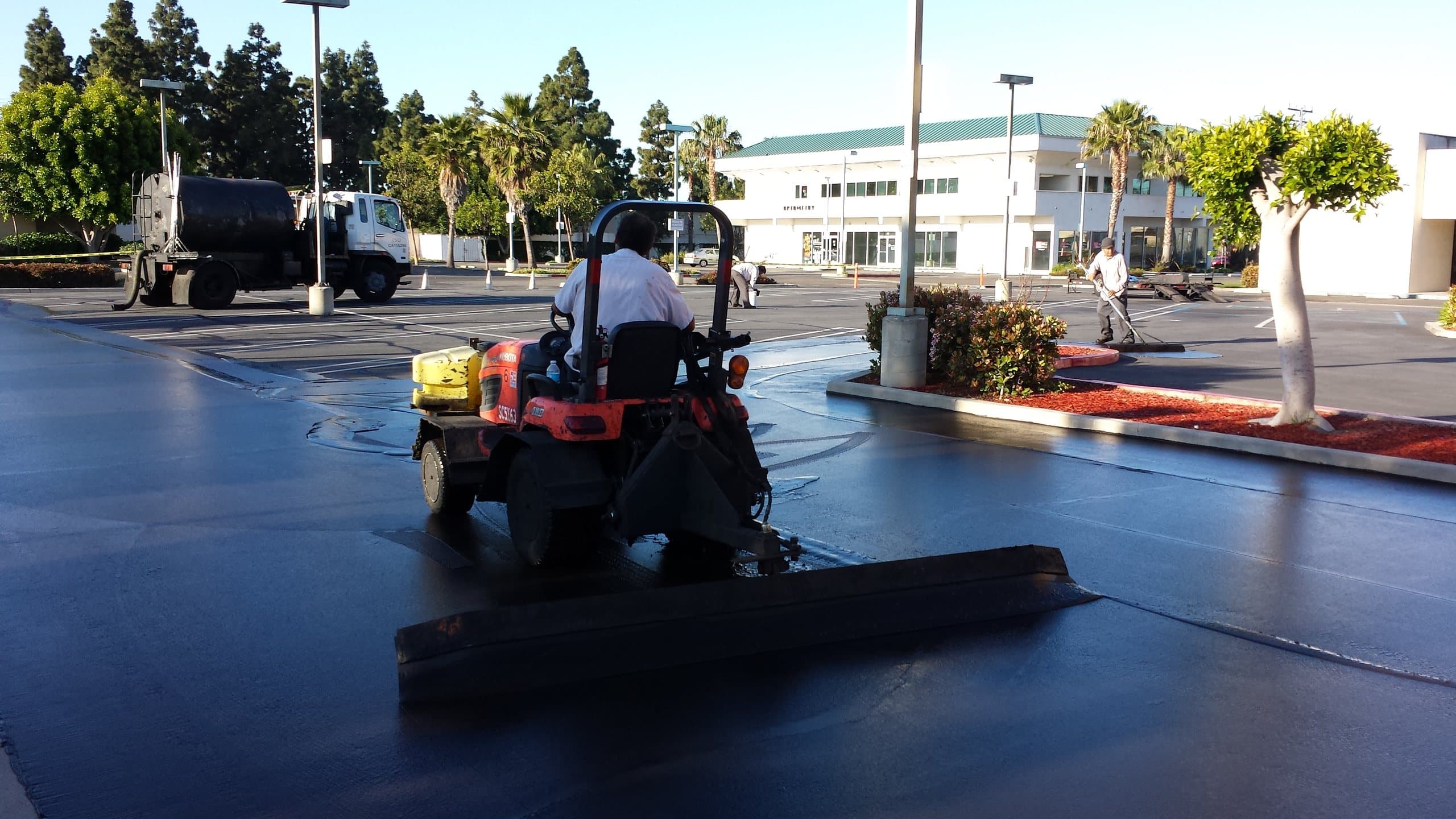
A seal coat (often written “sealcoat”) is a thin liquid sealer spread or sprayed over existing asphalt. Some products have fine sand blended in for traction, but a seal coat does not add a structural layer. Its job is to shield the surface from sun and water and restore a uniform dark finish.
A slurry seal is a paving mixture of asphalt emulsion, very small crushed rock and water, placed as a single layer by a slurry machine. Because it contains aggregate, it leaves a thin new wearing surface with a sandpaper-like texture.
Side by side
| Topic | Seal coat | Slurry seal |
|---|---|---|
| What it is | Thin liquid sealer coating | Asphalt emulsion mixed with fine crushed aggregate |
| Adds a new wearing surface? | No | Yes — a thin one |
| Best suited to | Sound pavement that is gray and dry but not breaking up | Sound pavement that is raveling, weathered or has lost skid resistance |
| Finish | Smooth, dark surface | Gritty, textured surface |
| Fixes cracks, potholes or base failure? | No — repair first | No — repair first |
Caltrans lists the benefits of slurry seal as reducing oxidation and water infiltration, providing skid resistance and correcting raveling and weathering, with an average performance life of 3 to 5 years on the pavements it manages. How long either treatment lasts on a private lot depends on traffic, sun exposure and the condition of the pavement underneath.
When neither one is the answer
Surface treatments protect pavement that is still structurally sound. The Federal Highway Administration’s slurry seal checklist starts by confirming there is no alligator cracking — a sign of subgrade failure or inadequate drainage — and that cracks wider than 1/8 inch have been sealed. Caltrans likewise does not recommend slurry seal where the base or structure is unsound.
If a lot has widespread alligator cracking, potholes that keep coming back, or areas that sink or hold water, those sections need patching or remove-and-replace repairs first. Coating over them hides the problem only briefly. Our guide to what parking lot damage is telling you walks through the common signs.
How a treatment is usually sequenced
- Repair failed areas by patching or removing and replacing sections that are breaking up.
- Fill cracks so water stays out of the base.
- Clean the surface so the treatment bonds.
- Apply the seal coat or slurry seal and keep traffic off until it has cured. Cure time depends on temperature, humidity and shade, so ask for the plan for your site.
- Restore stall lines, arrows, stenciling and accessible parking markings.
City Service Paving performs each of these steps: crack filling, seal coating and slurry coating, patching and repair, and striping and stenciling.
Questions to ask before you choose
- Is the pavement structurally sound, or are there areas that need repair first? Ask to see them marked on a site plan.
- Is the surface losing stone and feeling rough (raveling), or is it mostly faded and dry?
- What traffic does the area carry? Turning trucks and busy drive aisles are hard on thin surface treatments.
- How long will each area be closed, and how will tenants, residents and deliveries get around it?
- Is restriping included, and will the layout be checked for accessible parking?
Sources
- Slurry Seal Application Checklist (Pavement Preservation Checklist Series) (opens in a new tab) — Federal Highway Administration
- Pavement Preservation (Federal-aid Essentials for Local Public Agencies) (opens in a new tab) — Federal Highway Administration
- Maintenance Technical Advisory Guide — Flexible Pavement Preservation Overview (opens in a new tab) — Caltrans
- Maintenance Technical Advisory Guide — Chapter 8: Slurry Seals (opens in a new tab) — Caltrans